Epeus' epigone

Edifying exquisite equine entrapments

Showing posts with label google. Show all posts

Tuesday, 2 April 2013

Hosting and Impermanence

I linked to my boys' old blog today when Christopher asked for an April Fools prank idea, and noticed that the images were missing. This is due to the demise of iDisk, Apple's handy built-in version of DropBox that I paid them about $100/year for until they shut it down and broke all my links to it.

To fix this, I copied the old iDisk Sites folder to Google Drive, and manually changed the links in the blog posts. Then I had a thought - could I host my twitter archive this way? As you can see it works.

Here's how to do it:

  1. Download your Twitter Archive by clicking Request your archive on the Account Settings page.
  2. Install Google Drive
  3. Expand the archive and copy it into the local Google Drive folder
  4. Go to Google Drive in the browser, and set the folder to public using the Share button.
  5. Copy the URL which will be something like: https://drive.google.com/#folders/0B7cAS_dEul22V3d5c0d5WkpEOFE
  6. Edit the first part to be 'googledrive.com/host' so you get https://googledrive.com/host/0B7cAS_dEul22V3d5c0d5WkpEOFE
  7. (Optional) Go over to a URL shortener and make a short link for it like I did http://j.mp/kmtweets

Now you have your old tweets hosted on Google. Tweet a link to them.

Aha, I can just drag my Twitter archive onto Google Drive and publish it j.mp/kmtweets

— Kevin Marks (@kevinmarks) April 2, 2013
Posted by Kevin Marks at 03:26 6 comments:
Labels: Apple, google, hosting, Twitter

Monday, 23 January 2012

Google Plus admits they want fake names

Today, after 7 months, Bradley Horowitz announced that Google Plus will accept some pseudonyms. Kinda. If you can prove you're already famous. And can convince their robot it looks like a name. However, Google Engineer Yonatan Zunger spills the beans in a comment on that thread:

First of all, you might ask why we have a names policy at all. (i.e., why we don’t simply go with the JWZ proposal) One thing which we have discovered, while putting some miles on the system, is that it is indeed important to have a name-based service rather than a handle-based service. This isn’t a matter of functionality so much as of community: You get a different kind of community when people are known as Mary Smith than when they are known as captaincrunch42, and for a social product in particular we decided that the first kind of community is the one we want to build. In order to do that, we want to establish a general norm that the names you put in to the system should be names, not handles.

So one thing that our name checking flow tries to catch is handles, which should normally be nicknames, shown in addition to a name. The other important thing it’s trying to catch is people who are creating individual accounts, rather than +Pages, for non-human entities such as businesses or organizations. The behavior of +Pages is deliberately restricted in the system, and we don’t want people to be creating fake human accounts to circumvent that. The name check turns out to be a very powerful tool to catch these.

Our name check is therefore looking, not for things that don’t look like “your” name, but for things which don’t look like names, period. In fact, we do not give a damn whether the name posted is “your” name or not: we will not challenge you on this basis, nor is there any mechanism for other users to cause you to be challenged for this.

There are two main cases where the name check screws up. One is false positives: people (such as you) who have unusual names which get flagged because they looked like handles. Being able to appeal via things such as drivers’ licenses is useful for this case, since it’s a simple “oh, we got this wrong.” The other case is people such as +trench coat, who are so well-known under this handle that it would be bizarre not to let them onto the system under this name. For this case, we allow appeals based on being well-known under the name: thus the ability to prove the “established pseudonym.” We’ve deliberately set the threshold for that latter case fairly high for now, but we intend to continue to tune it; the objective is that the frequency of such names should basically be the same as their frequency in meatspace.

So to answer your questions one-by-one:

(2) “Meaningful following” only applies to cases of established pseudonyms which do not look like names. The definition of “meaningful” is deliberately vague so that we can tune it, so that it behaves in a natural fashion.

(3) That’s correct; drivers’ licenses are for false positives, not pseudonyms.

(4) Unusual names will indeed hit friction, because of false positives. We’re trying to minimize that, but it’s going to take some trial and error.

(5) Google+ can absolutely be your first identity online. No matter what your language, no matter where you come from. The “established pseudonym” logic should apply to a very small subset of people. If some groups are seeing a higher false positive rate than others, that’s a bug, not a feature, and we have the data available to spot this situation and remedy it.
(posted in full, in case of subsequent retraction, and because G+ doesn't have permalinks for comments)

Yonatan admits what Bradley obscures:that this is an Identity Theatre issue. They don't want your name, They don't care if you have a forename in one language and a surname in another. Let me quote this exactly:

Our name check is therefore looking, not for things that don’t look like “your” name, but for things which don’t look like names, period. In fact, we do not give a damn whether the name posted is “your” name or not: we will not challenge you on this basis, nor is there any mechanism for other users to cause you to be challenged for this.

This is what I suspected when I wrote Google Plus must stop this Identity Theatre

Google+ is letting an algorithm decide what is a name and what isn't. You will be forced into it's Procrustean idea of what names are, or be harassed for it. You have to pass as normal, like call centre workers forced to learn to sound American.

You can create disposable accounts with fake names, as long as they look plausible to Yonatan's bot.


This algorithm has allowed people called 'panel heater' 'The Phoenix Rising' 'tous les mais du monde' and Mehr Decent , a bot with a well-known actress's photo posting links to a single website to follow me (and that's just in the most recent 30 I checked).

So Google continues to encourage fakers and discourage those who need a pseudonym for good reasons.
Posted by Kevin Marks at 14:29 21 comments:
Labels: google, Identity, pseudonyms

Monday, 26 December 2011

Facebook, Twitter and Google Plus shun HTML, causing the infographic plague.

By choosing images over links, and by restricting markup, Facebook, Twitter and Google+ are hostile to HTML. This is leading to the plague of infographics crowding out text, and of video used to convey minimal information.

graph from Google trends of rising incidence of 'infographic' since 2009

The rise of so-called infographics has been out of control this year, though the term was unknown a couple of years ago. I attribute this to the favourable presentation that image links get within Facebook, followed by Twitter and Google plus, and of course though other referral sites like Reddit. By showing a preview of the image, the item is given extra weight over a textual link; indeed even for a url link, Facebook and G+ will show an image preview by default.

Consequently, the dominant form of expression has become the image. This was already happening with LOLcats and other meme generators like Rage Comics, where a trite observation can be dressed up with an image or series of images.

Facebook, Twitter, Google+, Y U no like HTML, just pix?

Before this, in the blogging age, there was a weight given to prose pieces, and Facebook and Google preserve some of this, but the expressiveness of HTML through linking, quoting, using images inline, changing font weight and so on, is filtered out by the crude editing tools they make available.

Feeds and feed readers started out this way too, but rapidly gained the ability to include HTML markup. Twitter went back to the beginning, and added the extra constrain of 140 characters because of it's initial SMS focus. Now it is painfully reinventing markup, though the gigantic envelope and wrapper of metadata that accompanies every tweet. This now has an edit list for entities pointing into it, and instructions for how to parse this to regain the author's intent is part of the overhead of working with their API.

Image links, however — at least those from recognised partners — are given privileged treatment. Facebook and Google have emulated this too, leading to the 'trite quote as image' trope. The spillover of this to news organisations became complete this year, with blogs and newspapers falling over themselves to link to often-tendentious information presented in all-caps and crude histogram form.

So here's my plea for 2012: Twitter, Facebook, Google+: please provide equal space for HTML. And for authors and designers everywhere, stop making giant bitmaps when well-written text with charts that are worth the bytes spent on them could convey your message better.

Update: My son made a Rage Comic version of this post (with an explanation) why.

Posted by Kevin Marks at 15:17 63 comments:
Labels: facebook, google, infographic, Twitter

Monday, 26 September 2011

'with Amazon' replacing 'with Google' on Android?

Amazon is set to launch an Android Tablet on Wednesday. What if they license their code too? Android as experienced on phones is actually two separate software bundles - the Open Source core of Android, and the proprietary 'with Google' applications, including the App Market, Maps, Gmail, Talk, Contacts, Listen and other apps bound to Google services, and requiring a business development deal to ship with a device. Eric Schmidt explicitly discussed this strategy at Dreamforce.

Now there are already more Android devices than I can count that don't follow the 'with Google' playbook, including the Barnes & Noble Nook that probably inspired this response from Amazon, but there are hints of a broader strategy here. What if Amazon offered an alternative to Google's top half of Android? I think Amazon does not really want to be in the hardware design business, but wants to be sure that they can't be locked out of it or forced to pay extra by Apple, Google or any other potential competitor. As well as releasing their own 7" tablet, they could offer an Open Source or lightly licensed version of their stack to other hardware developers.

Why would Amazon do this? Because they are primarily in the shopping and media business. Apple has stopped them selling eBooks and media inside their apps on iPad/iPhone; Google has banned their App Store from the Google Android Market. Amazon could even offer a referral fee for anything bought via their store as an incentive for device manufacturers to ship it.

An even bolder step wold be to actually fork Android. Google has a delayed-open model for Android source, where a new version is released in public after a closed development process, without a clear way to send in patches to Google. Amazon could put their current version up on Github, accept patches, and treat Google's new drops as another source of possible patches.

Understanding each company's core business is what makes this likely. Apple is in the devices business, with the media business as a small side earner designed to make their devices more attractive. Google is in the Advertising business, with their Android business designed to make searching everywhere, continuously more likely. Amazon is in the shopping business, migrating from physical goods to media, with Kindle a way to drive this. A tablet that they can sell audio and video to as well as eBooks makes more sense to them if it as widely distributed as Kindle playback apps are now.

Posted by Kevin Marks at 17:17 No comments:
Labels: amazon, android, Apple, google

Saturday, 20 August 2011

Google Plus must stop this Identity Theatre

Bruce Schneier in Beyond Fear coined a phrase:

one of the goals of a security countermeasure is to provide people with a feeling of security in addition to the reality. But some countermeasures provide the feeling of security instead of the reality. These are nothing more than security theater. They're palliative at best.

The Common Names debâcle at Google Plus is a variant of this, where the supposed protections are manifestly not working. Google's stated policy on this is that you should use your 'common name' - normatively defined to have exactly two words in it, in a naïve English speaking way, that fails in a huge number of common English cases, let alone other languages.

Vic Gundotra has said

he is trying to make sure a positive tone gets set here. Like when a restaurant doesn't allow people who aren't wearing shirts to enter.

so it is explicitly designed to exclude 'people not like us' from the space.

Early users can set the tone for a network, but one that has aspirations to include most people will need to support multiple different communities within it. If you want a positive tone, you have to work at it, and empower the tummlers to maintain it. Teresa Nielsen-Hayden put it well:

1. There can be no ongoing discourse without some degree of moderation, if only to kill off the hardcore trolls. It takes rather more moderation than that to create a complex, nuanced, civil discourse. If you want that to happen, you have to give of yourself. Providing the space but not tending the conversation is like expecting that your front yard will automatically turn itself into a garden.

2. Once you have a well-established online conversation space, with enough regulars to explain the local mores to newcomers, they’ll do a lot of the policing themselves.

More from Teresa and from John Scalzi.

The initial flavour of Google Plus, because it was seeded by Googlers and other geeky folk they invited, was like pre-Eternal September Usenet - it had a cultural coherence because we were all geeks. As it grew to 25 million users, this could not hold.

Blogs deal with this by making it clear who the site owners are, and empowering them to manage commenters. Twitter does it by not showing you comments unless you chose to see the commenter, or if they address you directly. Google Plus is an uneasy hybrid of the two.

You can delete and block commenters on your postings, like a blog, and if you reshare someone's post, it starts a new comment thread, like a blog. However, anyone can @ or + your name and drag you into another comment thread via notification, and then you get notified of other follow-ups too, making griefing and harassment all too easy.

Enforcing 'common names' does nothing to help this; it just means your trolls and griefers will be using plausibly American-looking names that may or may not be their own, while those with unusual names, will either be excluded outright or easily preyed on by the griefers reporting them, which is what I suspect happened to Violet Blue tonight.

Once you are suspended, the verification process is crude and manual, and also easily gamed. Kellan warned about this problem:

If you’ve never run a social software site … let me tell you: these kinds of false positives are expensive.

They’re really expensive. They burn your most precious resources when running a startup: good will, and time. Your support staff has to address the issues (while people are yelling at them), your engineers are in the database mucking about with columns, until they finally break down about build an unbanning tool which inevitably doesn’t scale to really massive attacks, or new interesting attack vectors, which means you’re either back monkeying with the live databases or you’ve now got a team of engineers dedicated just to building tools to remediate false positives. And now you’re burning engineer cycles, engineering motivation (cleaning up mistakes sucks), staff satisfaction AND community good will. That’s the definition of expensive.

And this is all a TON of work.

And while this is all going down you’ve got another part of your company dedicated to making creating new accounts AS EASY AS HUMANLY POSSIBLE. Which means when you do find and nuke a real spammer, they’re back in minutes. So now you’re waging asymmetric warfare AGAINST YOURSELF.

This is the hole Google is now in. A surprisingly large number of people I know, who've been discussing civilly online for years, have fallen foul of Vic's Procrustean name rules. When they point this out, they're harrassed by 'Real named' dickheads telling them to shut up and change their name, both in public and by being +-summoned by the trolls, and they have to find Google plus's well-hidden blocking tools rather quickly. Or give up and go elsewhere.

Now, Google has announced that they are verifying some people's names, to prevent impersonation. Trouble is, they haven't said how . Twitter verifies celebrities via an opaque process. Amazon does it by checking your name matches a Credit Card. Google Search uses rel="me" and rel="author" microformats. What Plus does is unknown. One of my profiles is verified, possibly because I went through the verification process on Google Knol before.

This is also Identity theatre - Google saying 'trust us', rather than revealing the rel="me" link from the person's page that we already know.

Vic Gundotra needs to stop digging this hole. Scrap the normative 'common names' policy, add a coherent name verification and linked-site verification so we can tell the people we already know, and make moderation tools visible and available so we can curate the conversations ourselves.

With this, and an apology to those already ensnared by the existing process, he could maybe prevent Plus from being spoken of only alongside Wave and Knol.

More on this:

  • my.nameis.me has testimonials on the nuances of names
  • jwz is shocked by othering of the anonymous
  • The EFF's case for pseudonyms
  • Journalists tempted by slumming
Improved certificate
Posted by Kevin Marks at 05:42 27 comments:
Labels: google, Identity, nymwars, Tummeling

Tuesday, 7 September 2010

If Google predicts your future, will it be a cliché?


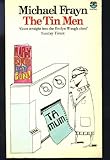
I wonder if Michael Frayn saw the launch of Google Scribe today, and smiled to himself. In 1965, Frayn wrote a book The Tin Men, which featured a mechanism that wrote newspaper articles by joining together clichéd phrases through a small number of rules.
There's an explanatory extract from it in this discussion of why you should avoid clichés when writing Poetry.
He opened the filing cabinet and picked out the first card in the set. Traditionally, it read. Now there was a random choice between cards reading coronations, engagements, funerals, weddings, comings of age, births, deaths, or the churching of women. The day before he had picked funerals, and been directed on to a card reading with simple perfection are occasions for mourning. Today he closed his eyes, drew weddings, and was signposted on to are occasions for rejoicing.
The wedding of X and Y followed in logical sequence, and brought him a choice between is no exception and is a case in point. Either way there followed indeed. Indeed, whichever occasion one had started off with, whether coronations, deaths, or births, Goldwasser saw with intense mathematical pleasure, one now reached this same elegant bottleneck. He paused on indeed, then drew in quick succession it is a particularly happy occasion, rarely, and can there have been a more popular young couple.From the next selection, Goldwasser drew X has won himself/ herself a special place in the nation’s affections, which forced him to go on to and the British people have clearly taken Y to their hearts already.
Goldwasser was surprised, and a little disturbed, to realise that the word “fitting” had still not come up. But he drew it with the next card — it is especially fitting that.
This gave him the bride/bridegroom should be, and an open choice between of such a noble and illustrious line, a commoner in these democratic times, from a nation with which this country has long enjoyed a particularly close and cordial relationship, and from a nation with which this country’s relations have not in the past been always happy.
Feeling that he had done particularly well with “fitting” last time, Goldwasser now deliberately selected it again. It is also fitting that, read the card, to be quickly followed by we should remember, and X and Y are not merely symbols — they are a lively young man and a very lovely young woman.Goldwasser shut his eyes to draw the next card. It turned out to read In these days when he pondered whether to select it is fashionable to scoff at the traditional morality of marriage and family life or it is no longer fashionable to scoff at the traditional morality of marriage and family life. The latter had more of the form’s authentic baroque splendour, he decided.
George Orwell, in Politics and the English Language, described this way of writing:

As I have tried to show, modern writing at its worst does not consist in picking out words for the sake of their meaning and inventing images in order to make the meaning clearer. It consists in gumming together long strips of words which have already been set in order by someone else, and making the results presentable by sheer humbug. The attraction of this way of writing is that it is easy. It is easier—even quicker, once you have the habit—to say “In my opinion it is not an unjustifiable assumption that” than to say “I think”. If you use ready-made phrases, you not only don't have to hunt about for the words; you also don't have to bother with the rhythms of your sentences since these phrases are generally so arranged as to be more or less euphonious. When you are composing in a hurry—when you are dictating to a stenographer, for instance, or making a public speech—it is natural to fall into a pretentious, Latinized style. Tags like “a consideration which we should do well to bear in mind” or ”a conclusion to which all of us would readily assent” will save many a sentence from coming down with a bump.
Clearly, Google Scribe has been trained on the vast corpus of English language text that is also used for Google Translate to come up with plausible sentence fragments. Equally clearly, that means it is bound to be plucking phrases that have been written before out of the web for you, and favouring those that have been said most often. It won't come up with a crisp, resoundingly clear phrase for you, unless it has already been said many times before.
Orwellian prediction

The most likely words to follow “clocks were” now, according to Google, are “striking thirteen”. I hope Orwell would appreciate the irony.
Now, this is amusing in itself, but it is also indicative of a wider problem. If you've done much web searching for, say, home maintenance tips, you'll see a lot of prose that has either been written by a machine of this type, or by poorly paid human writers who use a very similar compositional process. We have a kind of mutated Turing Test going on all around us, where robotic writers are trying to convince robotic readers that they are human, and their stilted prose is worth presenting to the real people searching. Of course, the robots are searching too, to get the source material that is fed into their word mills to create this shambling facsimile of human prose.
It may be impressive that computers can now write bad prose like so many people do, but I do wonder about Eric Schmidt's grand vision of Google predicting what we will want to do before we think of it ourselves. Will it in fact be what we wanted, or will it be a mishmash of expected behaviours, that we'll regret on our deathbeds?
1. I wish I'd had the courage to live a life true to myself, not the life others expected of me.
This was the most common regret of all. When people realise that their life is almost over and look back clearly on it, it is easy to see how many dreams have gone unfulfilled.
A scene in Tom Stoppard's The Real Thing sums this up well:
He’s a lout with language. I can’t help somebody who thinks, or thinks he thinks, that editing a newspaper is censorship, or that throwing bricks is a demonstration while building tower blocks is social violence, or that unpalatable statement is provocation while disrupting the speaker is the exercise of free speech… Words don’t deserve that kind of malarkey. They’re innocent, neutral, precise, standing for this, describing that, meaning the other, so if you look after them you can build bridges across incomprehension and chaos. But when they get their corners knocked off, they’re no good any more, and Brodie knocks corners off without knowing he’s doing it. So everything he writes is jerry-built. It’s rubbish. An intelligent child could push it over. I don’t think writers are sacred, but words are. They deserve respect. If you get the right ones in the right order, you can nudge the world a little or make a poem which children will speak for you when you’re dead.
People are used to typing questions into a box on Google and getting a machine's suggestions. Increasingly though, they're typing emotions into a box on Twitter or Facebook, and getting a human response instead.


Posted by Kevin Marks at 17:56 21 comments:
Labels: facebook, google, Twitter, words

Monday, 22 June 2009

Farewell to Google

I'm no longer working for Google. I had an interesting time there and worked on lots of fascinating projects with great colleagues, so this is a small look back at some of them.

My first taste of Google was to work on orkut, before starting the project now known as Google Profiles, which was first launched in Google Maps, and is now seen across Google and the wider web. I then worked on the engineering side of OpenSocial, before its launch. Realising that Google had thousands of engineers, but very few comfortable speaking in public, I became a Developer Advocate, working to bridge external and internal developers, explaining the Social web to Google and OpenSocial and more to the wider web community.

I've spent most of my time working on building and promoting open web standards, both inside the company and out. I helped launch the Social Graph API, promoted OAuth and OpenID, helped converge Portable Contacts with OpenSocial, and explained how the Open Stack fits together. I helped promote Microformats within Google and without and am very pleased to see them showing up in Rich Snippets in search. The Activity Streams effort continues this web-wide work to build social infrastructure to make the web more social.

I'll still be working on web standards through the groups above, the Open Web Foundation, the Open Rights Group, and more. Professionally, I'll be coding, writing and speaking on the social web via several new projects. I hope to see many of you this week when I'm talking to the SFAMA on Thursday night, and hosting the Microformats 4th Birthday party on Friday.

If you want to get hold of me, I'm kevinmarks on most social networks, domains and of course Twitter. Or just google me.

Posted by Kevin Marks at 11:59 65 comments:
Labels: google, Kevin Marks, Social Cloud, Social Web

Sunday, 11 January 2009

Hold your breath while Googling to save the planet

The Times and Telegraph have picked on some rather dubious stats on Google energy use:

a typical search generates about 7g of CO2 Boiling a kettle generates about 15g
but
Wissner-Gross has also calculated the CO2 emissions caused by individual use of the internet. His research indicates that viewing a simple web page generates about 0.02g of CO2 per second. This rises tenfold to about 0.2g of CO2 a second when viewing a website with complex images, animations or videos.

So client-side, a search costs 0.02g/s - to get to 7g you look at it for 350s, or nearly 6 minutes. But hang on:

A separate estimate from John Buckley, managing director of carbonfootprint.com, a British environmental consultancy, puts the CO2 emissions of a Google search at between 1g and 10g, depending on whether you have to start your PC or not. Simply running a PC generates between 40g and 80g per hour, he says. of CO2 Chris Goodall, author of Ten Technologies to Save the Planet, estimates the carbon emissions of a Google search at 7g to 10g (assuming 15 minutes’ computer use).

He's using it for 15 minutes per search? That gives 0.01g/s, or half the other chap's estimate.

Google's data centre's are carbon neutral, so it is only the client end you do have to worry about. However, breathing generates about 6g of Carbon every 10 minutes. Or about as much as they estimate computers do.

So I suggest you hold your breath while you search Google, to offset your carbon use. As searches return in well under a second, whatever these newspapers say, this shouldn't be any hardship. Or search from your Android or iPhone instead.

Update: Urs Hölzle gives some actual figures for searches energy use

Posted by Kevin Marks at 12:17 6 comments:
Labels: bad science, global warming, google

Monday, 30 June 2008

Google as a restaurant? Watch Gordon Ramsay

Jeff Jarvis says he's writing a metaphorical application of Google principles to running a restaurant. Over the last few weekends, while sorting out stuff at home, I've been watching Gordon Ramsay's Kitchen Nightmares which BBC America seems to be playing continuously at weekends. If you haven't seen it, do watch some - each episode, Ramsay spends a week at a failing restaurant in the UK and tries to help them turn it around.

After seeing a few, there are recurrent themes that Ramsay comes up with: simple menus, built on good ingredients that local people understand, served promptly. Which fits well with Google's ten things - simple frontend, low latency results, user-focused. How he tries these out involve analogues for user testing, A/B experiments, and profiling under high load.

Of course, Google does run restaurants - so Jeff can read how they get built and tested directly.

Posted by Kevin Marks at 14:03 No comments:
Labels: google, Gordon Ramsay, Restaurants
Older Posts Home
Subscribe to: Posts (Atom)

This is my personal blog. Any views you read here are mine, and not my employers'.

Atom Feed

Support the Open Rights Group
My photoKevin Marks Me on Twitter
Me on G+

People's thoughts I read:

Daily

Rosie
San Jose Young People's Theatre
Dave Weinberger
Doc Searls
Gonzo Engaged
AKMA
Cory & friends
Denise Howell
Charles Wiltgen
Shelley Powers
James Lileks
Suw Charman
Halley Suitt

Weekly

Andrew Marks
Blogsisters
Arts & Letters Daily
Bricklin, Frankston & Reed
Steve Yost
Jeneane Sessum
Brian Micklethwait et al
Tom Matrullo
Gary Turner

Sporadically

Small Pieces
Stuart Cheshire
RageBoy
Nonzero
Neil Gaiman
Thomas Vincent
Brad deLong
Andrew Odlyzko
ProSUA

No to Mickey Mouse Computers

powered by blogger

Blog Archive

  • ▼  2023 (1)
    • ▼  September (1)
      • Plus Theory
  • ►  2017 (2)
    • ►  May (1)
    • ►  April (1)
  • ►  2015 (7)
    • ►  November (2)
    • ►  May (3)
    • ►  April (1)
    • ►  January (1)
  • ►  2014 (3)
    • ►  October (1)
    • ►  April (2)
  • ►  2013 (5)
    • ►  June (1)
    • ►  May (1)
    • ►  April (2)
    • ►  March (1)
  • ►  2012 (8)
    • ►  December (1)
    • ►  May (1)
    • ►  April (1)
    • ►  March (1)
    • ►  January (4)
  • ►  2011 (11)
    • ►  December (1)
    • ►  November (1)
    • ►  September (2)
    • ►  August (2)
    • ►  July (1)
    • ►  April (2)
    • ►  January (2)
  • ►  2010 (16)
    • ►  November (1)
    • ►  October (1)
    • ►  September (3)
    • ►  June (1)
    • ►  May (2)
    • ►  April (2)
    • ►  March (2)
    • ►  February (2)
    • ►  January (2)
  • ►  2009 (22)
    • ►  November (2)
    • ►  October (2)
    • ►  September (2)
    • ►  August (3)
    • ►  July (2)
    • ►  June (2)
    • ►  May (2)
    • ►  April (1)
    • ►  February (2)
    • ►  January (4)
  • ►  2008 (29)
    • ►  December (2)
    • ►  November (3)
    • ►  August (1)
    • ►  July (3)
    • ►  June (3)
    • ►  May (5)
    • ►  April (2)
    • ►  February (3)
    • ►  January (7)
  • ►  2007 (45)
    • ►  November (3)
    • ►  October (4)
    • ►  September (4)
    • ►  August (10)
    • ►  July (3)
    • ►  June (8)
    • ►  April (2)
    • ►  March (6)
    • ►  February (3)
    • ►  January (2)
  • ►  2006 (119)
    • ►  December (13)
    • ►  November (8)
    • ►  October (16)
    • ►  September (10)
    • ►  August (3)
    • ►  July (6)
    • ►  June (24)
    • ►  May (3)
    • ►  April (10)
    • ►  March (7)
    • ►  February (8)
    • ►  January (11)
  • ►  2005 (101)
    • ►  December (10)
    • ►  November (13)
    • ►  October (9)
    • ►  September (8)
    • ►  August (7)
    • ►  July (7)
    • ►  June (8)
    • ►  May (12)
    • ►  April (7)
    • ►  March (6)
    • ►  February (1)
    • ►  January (13)
  • ►  2004 (53)
    • ►  December (8)
    • ►  November (5)
    • ►  October (6)
    • ►  September (7)
    • ►  July (5)
    • ►  June (3)
    • ►  May (2)
    • ►  March (3)
    • ►  February (7)
    • ►  January (7)
  • ►  2003 (196)
    • ►  December (12)
    • ►  November (14)
    • ►  October (21)
    • ►  September (23)
    • ►  August (19)
    • ►  July (11)
    • ►  June (14)
    • ►  May (9)
    • ►  April (22)
    • ►  March (20)
    • ►  February (16)
    • ►  January (15)
  • ►  2002 (224)
    • ►  December (15)
    • ►  November (21)
    • ►  October (22)
    • ►  September (12)
    • ►  August (11)
    • ►  July (28)
    • ►  June (19)
    • ►  May (29)
    • ►  April (18)
    • ►  March (19)
    • ►  February (16)
    • ►  January (14)
  • ►  2001 (13)
    • ►  December (2)
    • ►  November (11)

Contributors

  • Kevin Marks
  • Kevin marks